Agri-food Workers Safety Course & Certification - AWS2C
International Farm-Ready Programme
The Agri-food Workers Safety Course & Certification is our flagship online internationally oriented pre-departure safety awareness and workforce readiness programme designed to prepare Agri-food Workers seeking seasonal or long-term agricultural employment opportunities abroad, for safe, compliant, and productive experience, thus making it a powerful tool which addresses a critical gap in global labour mobility.
While many workers possess practical farming experience, they often lack formal training aligned with international occupational health and safety standards. This certification bridges that gap by equipping participants with foundational knowledge in farm safety protocols, workplace hazard identification, risk mitigation practices, and emergency response procedures.
The core objective of the programme is to ensure that workers are “Farm-Ready” before applying for agri-food jobs and work permits overseas. Being Farm-Ready means demonstrating an understanding of employer expectations, regulatory compliance requirements, safe equipment handling, biosecurity measures, and professional conduct in structured agricultural environments.
Through a structured online learning platform, participants gain standardized safety competencies applicable across diverse agricultural sectors, including dairy production, livestock farming, crop cultivation, horticulture, fish farming, meat processing, and forestry operations. The curriculum is designed to reflect the operational realities and compliance culture of major agricultural labour markets in Europe, North America, and Oceania.
Beyond technical safety knowledge, the certification reinforces accountability, workplace discipline, and risk awareness ; qualities that reduce employer liability and enhance worker credibility during recruitment. In doing so, the programme supports safer migration pathways, strengthens employability, and contributes to improved productivity and reduced accident rates within host-country agricultural systems.
Important Notice
It is important to note that this certification does not replace official work permits, visas, or government licensing requirements. Rather, it serves as a preparatory qualification that demonstrates proactive compliance readiness and professional commitment to safe agricultural practice.
The Agri-food Workers Safety Course & Certification therefore functions as both a safety training framework and a labour mobility enhancement tool, positioning certified workers as reliable, informed, and risk-conscious candidates for international agri-food sector employments.
Agricultural labour mobility has become an essential component of modern food production systems across Europe, North America, Oceania, and parts of Asia, as workforce shortages, demographic changes, and strict regulatory requirements continue to increase reliance on international agricultural workers. The Agri-food Workers Safety Course & Certification is aligned with the operational and compliance standards of major destination countries including New Zealand, Australia, Armenia, United Kingdom, Canada, United States, Belgium, Norway, Luxembourg, Hungary, Greece, Romania, Bulgaria, Italy, Spain, Belarus, Germany, France, Denmark, Sweden, Finland, Poland, Portugal, Netherlands, Russian Federation, Moldova, South Korea, Japan, Israel, Ukraine, Serbia, Montenegro, Czech Republic, Macedonia, Estonia, Latvia and Lithuania. These sectors ; including dairy production, livestock management, fish farming, horticulture, food processing, greenhouse operations, and forestry ; operate under highly structured workplace safety, biosecurity, environmental, and labour compliance regimes where “zero tolerance for preventable risk” is in full force.
Employers therefore increasingly seek workers who demonstrate prior safety awareness, procedural discipline, professionalism, and the ability to integrate quickly into regulated and productivity-driven environments where compliance with occupational health and safety standards is considered essential.
Most of the listed countries maintain strict workplace safety regimes enforced through national labour inspectorates and occupational safety authorities. Key features common across these systems include:
- Mandatory workplace risk assessments
- Compulsory use of Personal Protective Equipment (PPE)
- Incident reporting and documentation procedures
- Machinery certification and controlled operation protocols
- Chemical handling regulations
- Hygiene and contamination control standards in food production environments
Failure to comply with these standards exposes employers to legal liability, financial penalties, and reputational damage. Consequently, employers increasingly prioritise workers who understand compliance culture before arrival.
Strategic Positioning of the Programme
Many workers possess practical farming experience but may not have formal training aligned with international occupational health and safety expectations.
AWS2C bridges that gap.
AWS2C reflects a global employment landscape and prepares workers to align with international labour standards, understand regulatory expectations, and transition more effectively into highly regulated agricultural systems.
The programme equips workers with essential competencies in farm safety, hazard identification, workplace discipline, emergency response, biosecurity practices, equipment safety, employer expectations, and agricultural sector compliance standards.
By addressing the compliance culture of these destination countries, the programme positions certified participants as informed, risk-aware, and employer-ready candidates within competitive agriculture and food production labour markets.
Categories of Workers Covered by the Agri-food Workers Safety Course & Certification
The Agri-food Workers Safety Course & Certification is designed to prepare a broad spectrum of agricultural and agro-industrial workers for safe and compliant employment in international labour markets. The programme addresses role-specific occupational risks while maintaining a unified foundation in farm safety, hazard prevention, and emergency response.
Below are the primary categories of workers for whom this certification is applicable :
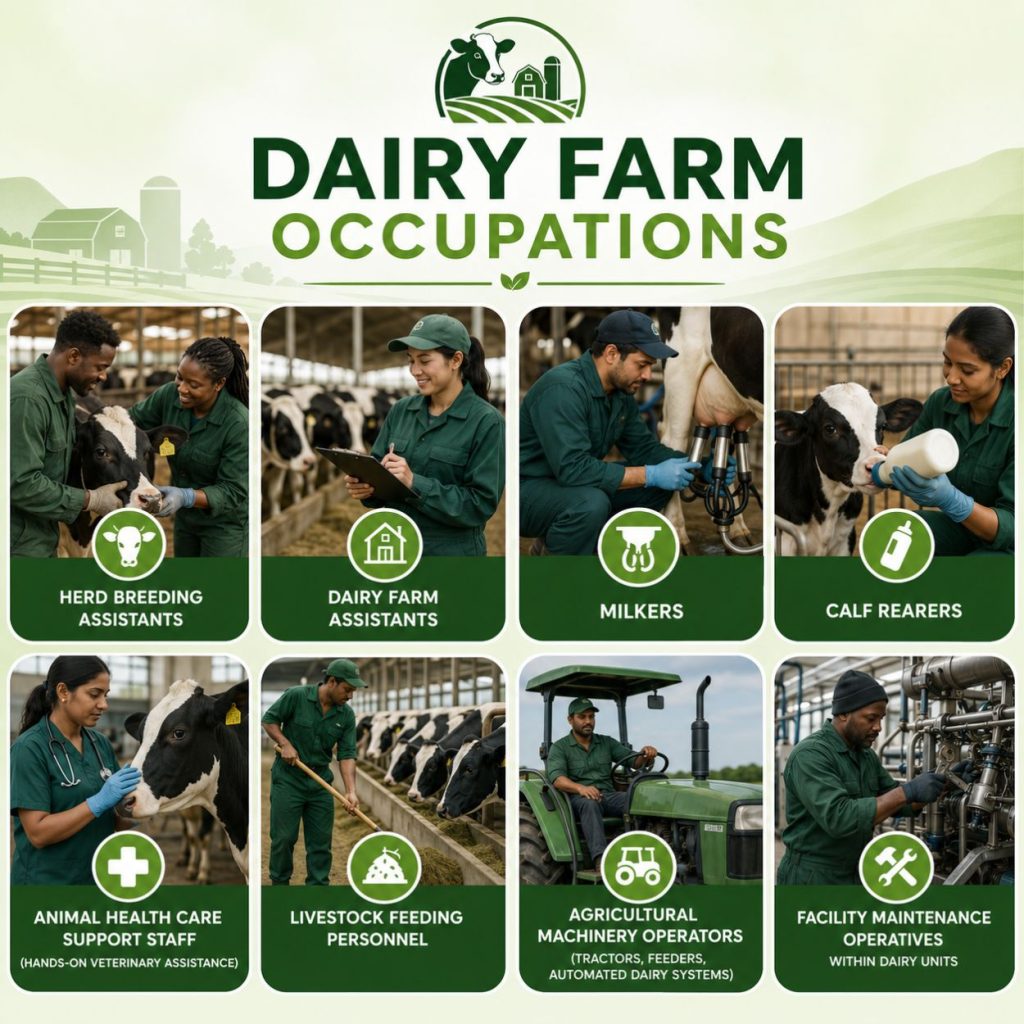
A. Dairy Farm Occupations
This category covers personnel engaged in intensive livestock operations and dairy production systems. These roles require strict adherence to animal handling protocols, biosecurity measures, machinery safety, and hygiene standards. Applicable roles include:
- Herd Breeding Assistants
- Dairy Farm Assistants
- Milkers
- Calf Rearers
- Animal Health Care Support Staff (hands-on veterinary assistance)
- Livestock Feeding Personnel
- Agricultural Machinery Operators (tractors, feeders, automated dairy systems)
- Facility Maintenance Operatives within dairy units
The training equips these workers with competencies in safe livestock handling, milking system hygiene, zoonotic disease prevention, equipment
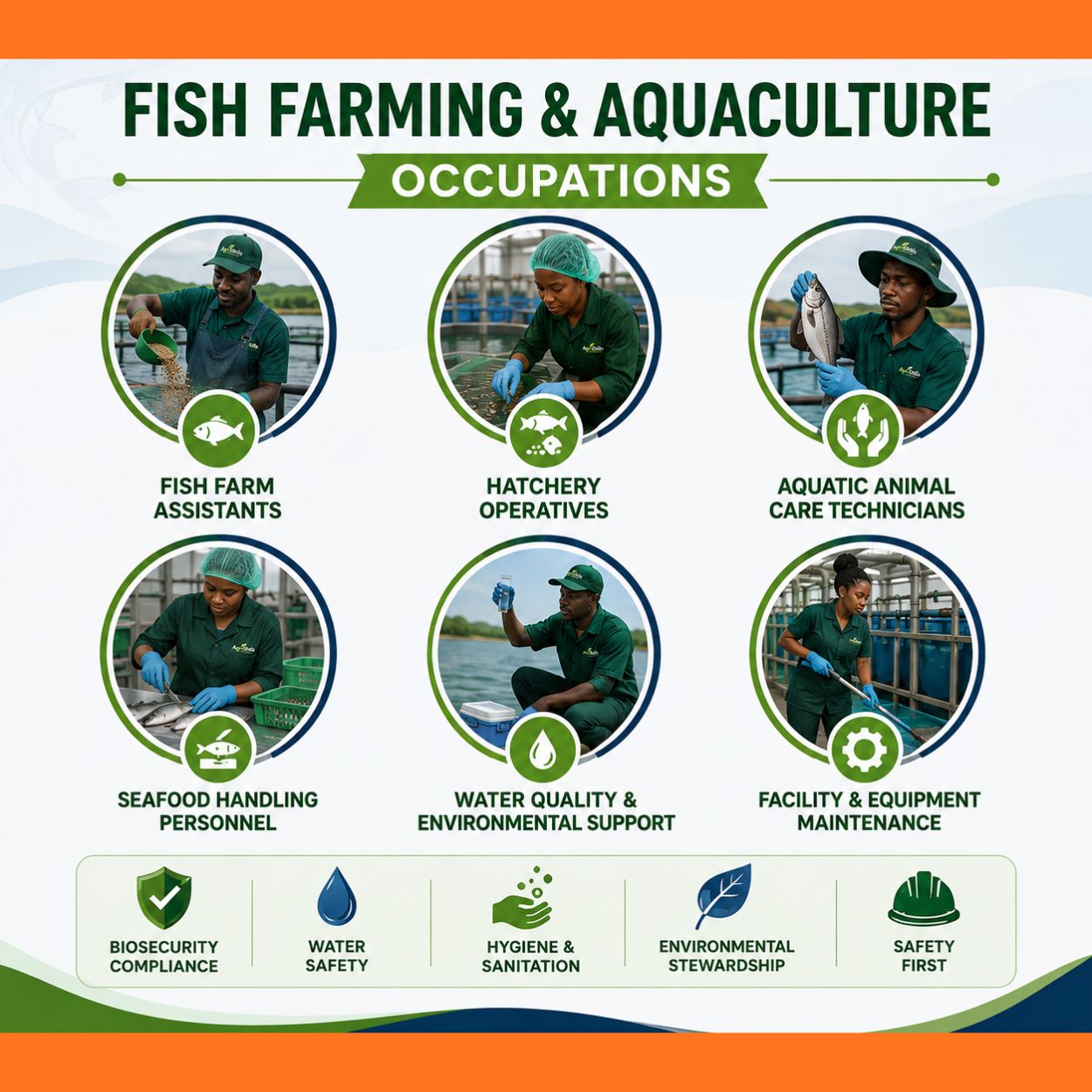
B. Fish Farming & Aquaculture Occupations
This category covers workers involved in commercial fish farming, aquaculture systems, hatchery operations, seafood handling, and aquatic livestock management. These environments require strict compliance with water safety procedures, biosecurity standards, hygiene protocols, environmental management practices, and equipment safety regulations. The AWS2C equips workers with essential knowledge in aquatic animal handling, contamination prevention, operational safety, and workplace sanitation, enabling them to operate safely and effectively within modern international aquaculture and fish production industries.
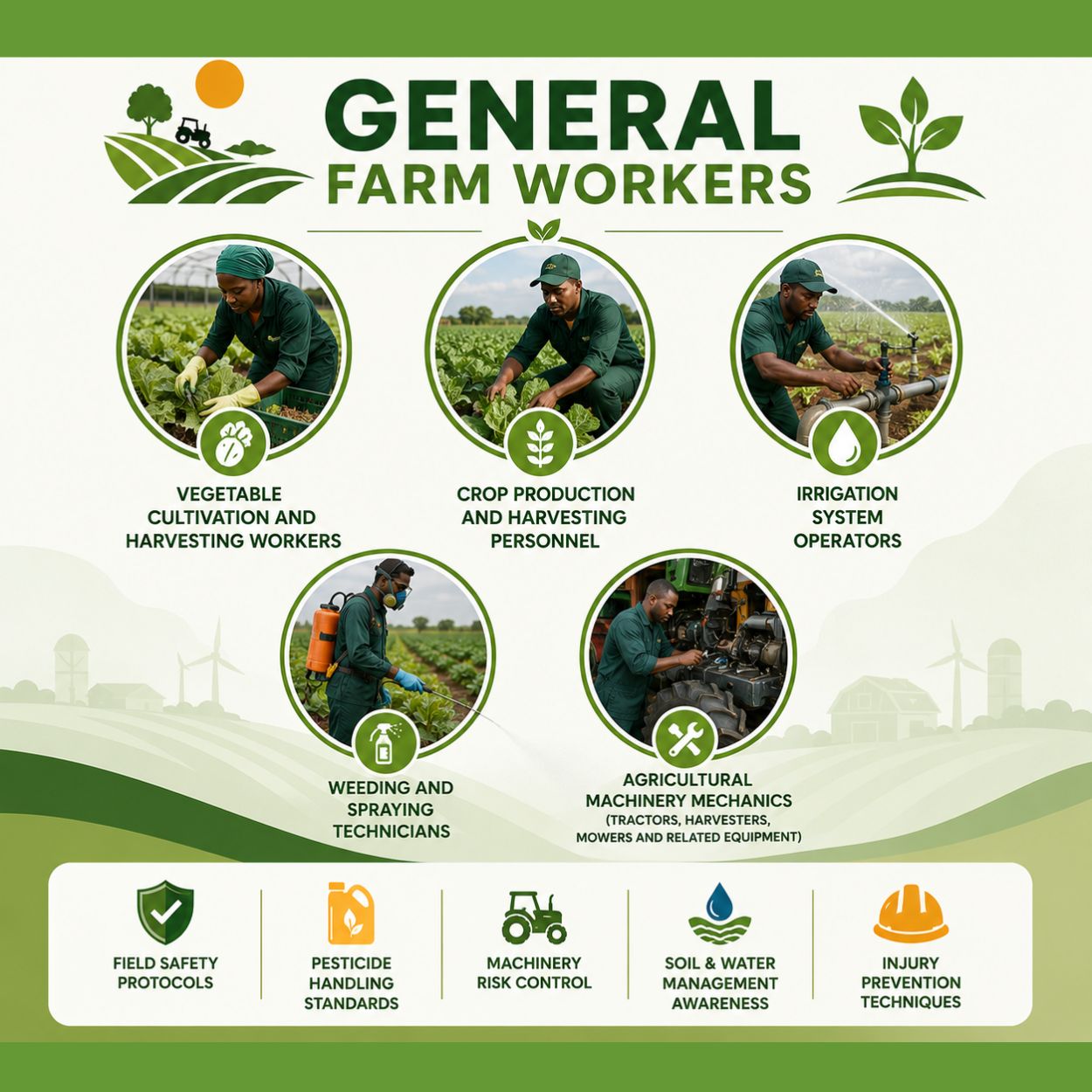
C. General Farm Workers
This group includes workers engaged in mixed farming, arable production, and field operations. These roles involve exposure to environmental hazards, manual handling risks, agrochemical use, and mechanised equipment. Covered occupations include:
- Vegetable Cultivation and Harvesting Workers
- Crop Production and Harvesting Personnel
- Irrigation System Operators
- Weeding and Spraying Technicians
- Agricultural Machinery Mechanics (tractors, harvesters, mowers and related equipment)
The certification provides training in field safety protocols, pesticide handling standards, machinery risk control, soil and water management awareness, and injury prevention techniques.
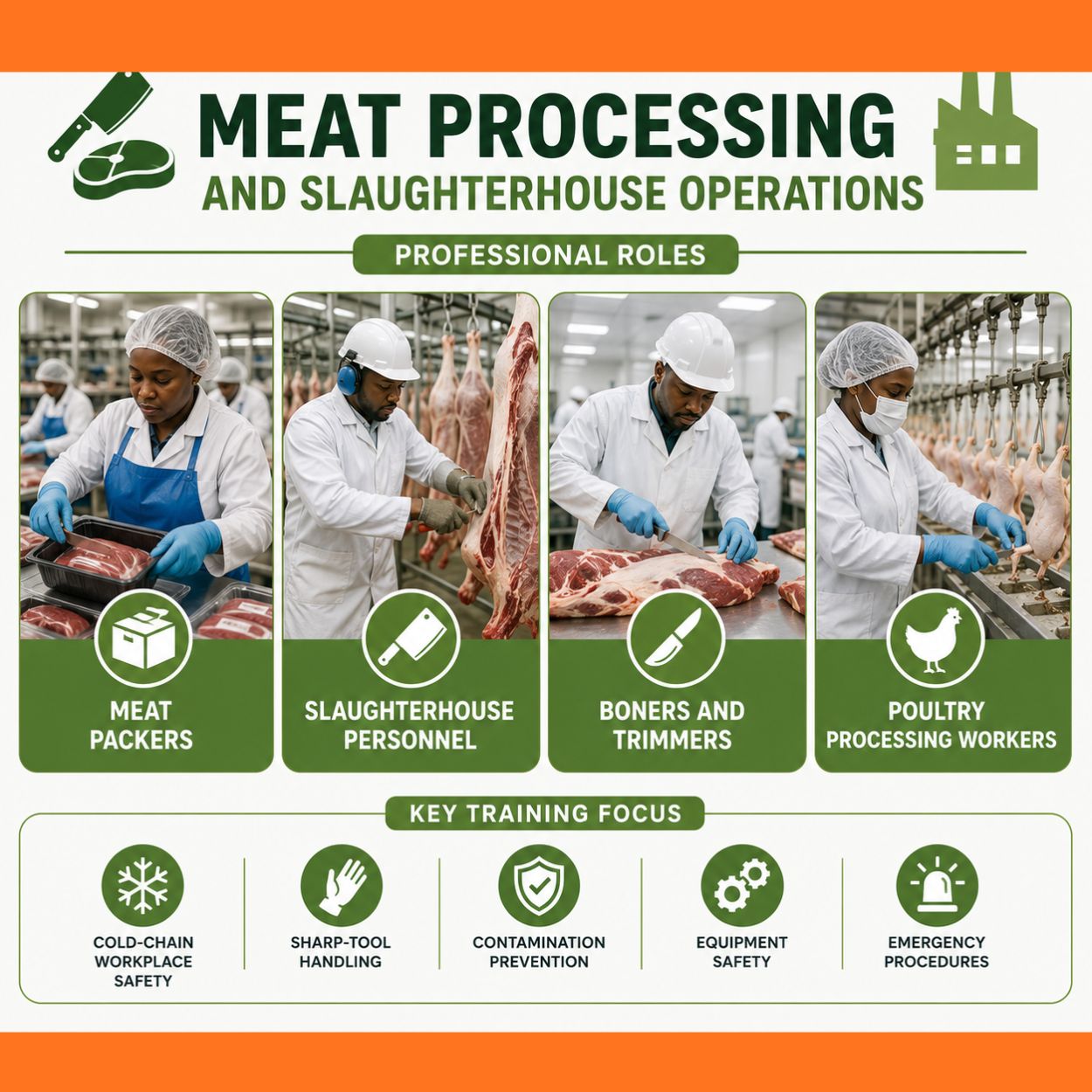
D. Meat Processing and Slaughterhouse Operations
Workers in meat processing environments operate in highly regulated settings requiring strict compliance with occupational safety, hygiene, and contamination control standards as well.
Relevant roles include Meat Packers, Slaughterhouse Personnel, Boners and Trimmers, and Poultry Processing Workers. The course addresses workplace safety in cold-chain environments, sharp-tool handling, contamination prevention, equipment safety, and emergency procedures in processing facilities
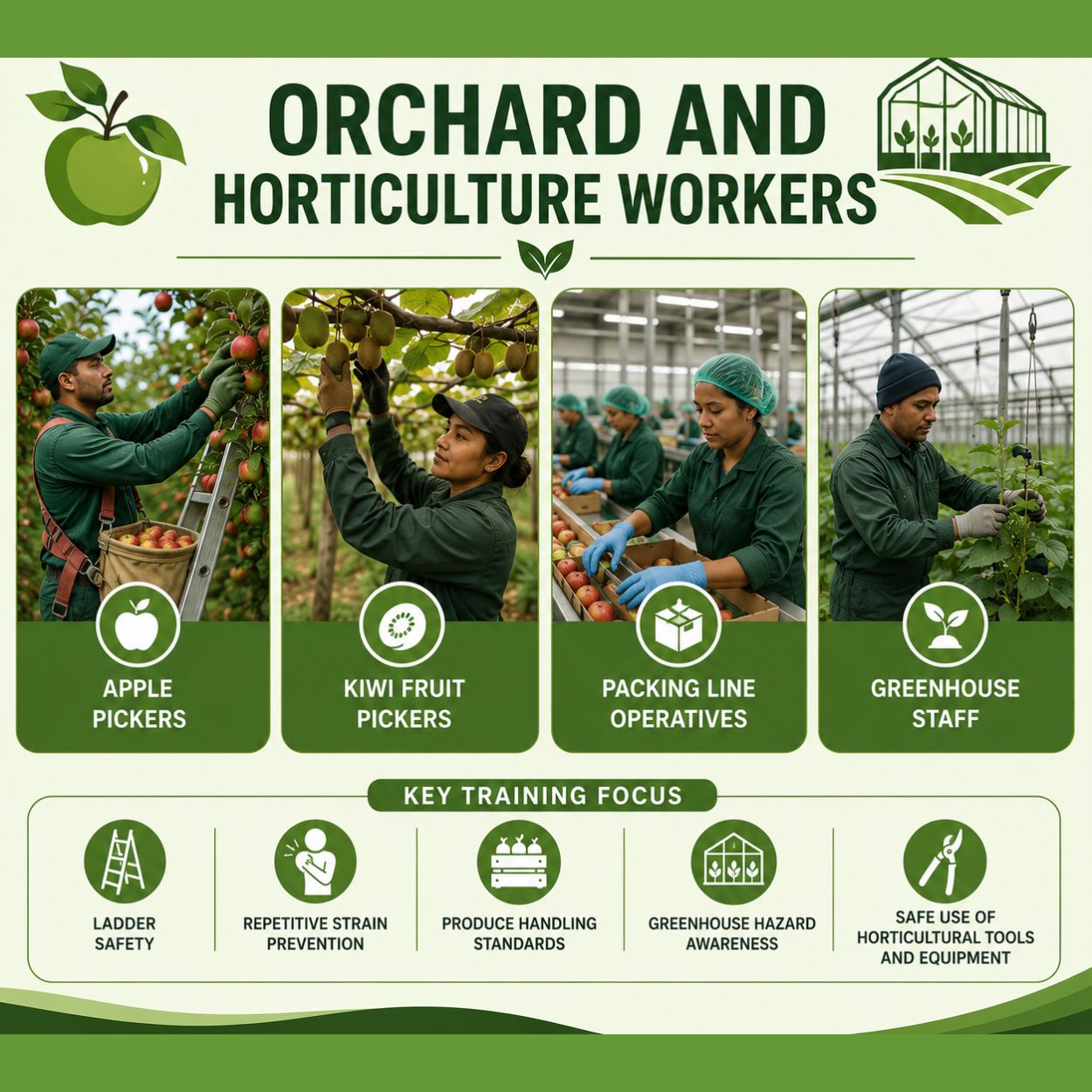
E. Orchard and Horticulture Workers
This segment includes labourers involved in fruit production, greenhouse cultivation, and post-harvest processing.
Covered roles include Apple Pickers, Kiwi Fruit Pickers, Packing Line Operatives and Greenhouse Staff.
Participants receive training in ladder safety, repetitive strain prevention, produce handling standards, greenhouse hazard awareness, and safe use of horticultural tools and equipment.
Cross-Sector Support Roles
In addition to core agricultural functions, the certification is equally relevant to essential support personnel operating within farm and agro-industrial ecosystems: • Forklift Operators • Agricultural and Transport Truck Drivers • Worker Accommodation Maintenance and Cleaning Staff These roles require competency in material handling safety, transport risk management, workplace hygiene, and accident prevention in shared facilities.
Important Notice
AWS2C is a workforce preparation and safety certification programme.
It does NOT replace:
official visas,
government licensing,
immigration approvals,
or legal employment authorizations
Click to Pay and enrol for the course
Become a trained and certified farm worker and position yourself for high paying global farm job opportunities